Stranded on GA-400? How to survive a highway breakdown
Stranded on GA-400? How to survive a highway breakdown
When traffic is flying past on GA-400 at 70 miles per hour, sitting on the shoulder of the highway can feel overwhelming. If you find yourself stranded during an unexpected breakdown asking, "Is there a reliable towing company near me?" you need an immediate, trustworthy answer. In this guide, you will discover the crucial steps to prevent dangerous secondary crashes, how Georgia's Move Over law protects your vehicle, and why calling Potts Towing guarantees honest ETAs, transparent pricing, and damage-free flatbed recovery across Forsyth County.
TL;DR: Key takeaways for North Georgia drivers
- According to the Federal Highway Administration (FHWA) Traffic Incident Management Program, "Secondary incidents are estimated to represent approximately 20% of all incidents," making fast clearance of disabled vehicles critical for highway safety.
- Navigating to the widest right shoulder, activating hazard lights, and staying belted inside your vehicle significantly reduces injury risks compared to attempting roadside repairs next to live lanes.
- Georgia's Move Over law requires passing motorists to shift over a lane or slow down significantly, giving you and your recovery team a safe buffer.
Secondary crash risks on busy commuter corridors
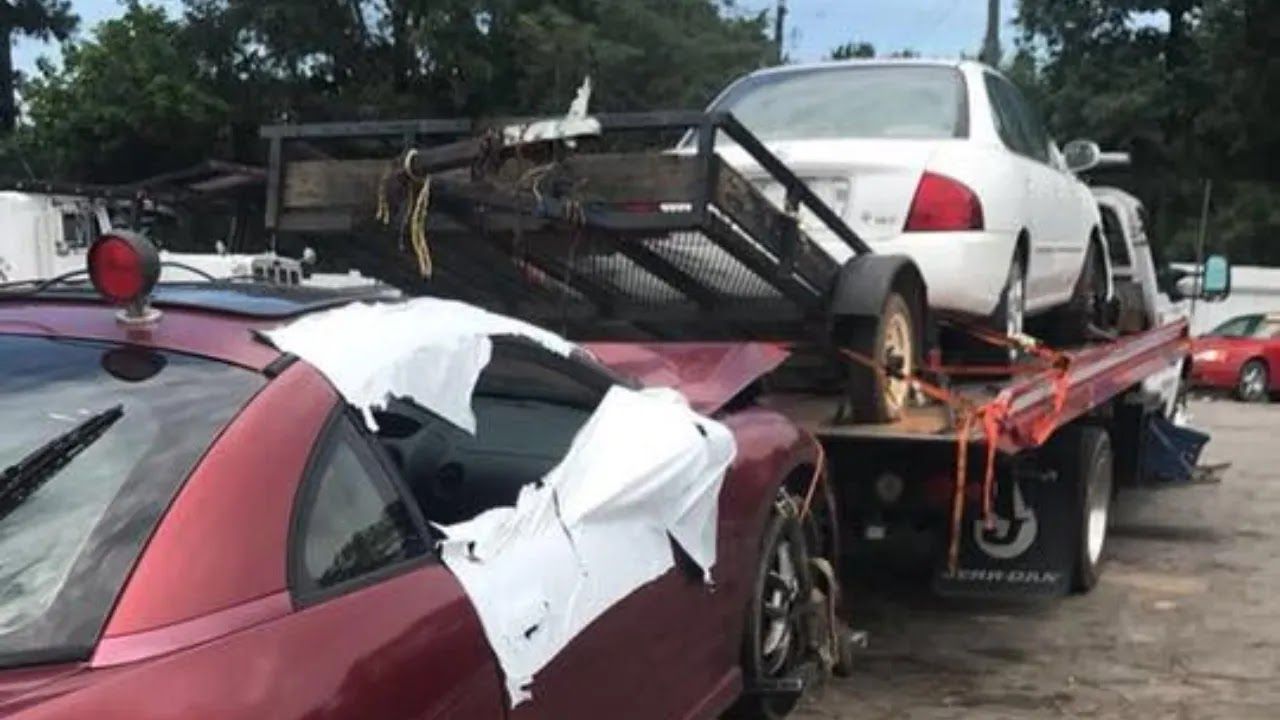
Secondary crashes represent one of the most hazardous aspects of a highway breakdown. When your car is stopped on the shoulder, fast-moving highway traffic and distracted drivers can quickly create dangerous situations.
Roadway incident risk escalation timeline
- 0 to 2 Minutes: Initial mechanical stall occurs. The vehicle transitions toward the roadway shoulder as traffic speeds remain high around the disabled car.
- 2 to 10 Minutes: Peak risk window for secondary collisions. Driver exposure is elevated if anyone attempts to exit the vehicle into live traffic.
- 10+ Minutes: Scene stabilizes as emergency recovery equipment arrives with high-visibility lighting to shield the disabled vehicle.
Understanding the secondary impact danger
Federal crash data demonstrates the severe exposure drivers face when stranded near active travel lanes. As documented in the
NHTSA Overview of Motor Vehicle Traffic Crashes (Report DOT HS 813 791), "a total of 39,254 people were killed in motor vehicle traffic crashes in 2024." Along narrow highway shoulders, passing motorists traveling at high speeds have only a fraction of a second to react to unexpected obstacles or sudden slowdowns.
In the Cumming area and across Forsyth County, where commuter traffic surges during peak morning and evening hours, this risk multiplies. Narrow shoulders, high travel speeds, and winding stretches along GA-400 and Highway 20 reduce reaction time, making immediate visibility and fast clearance critical.
Mechanical breakdown triggers and roadside diagnostics
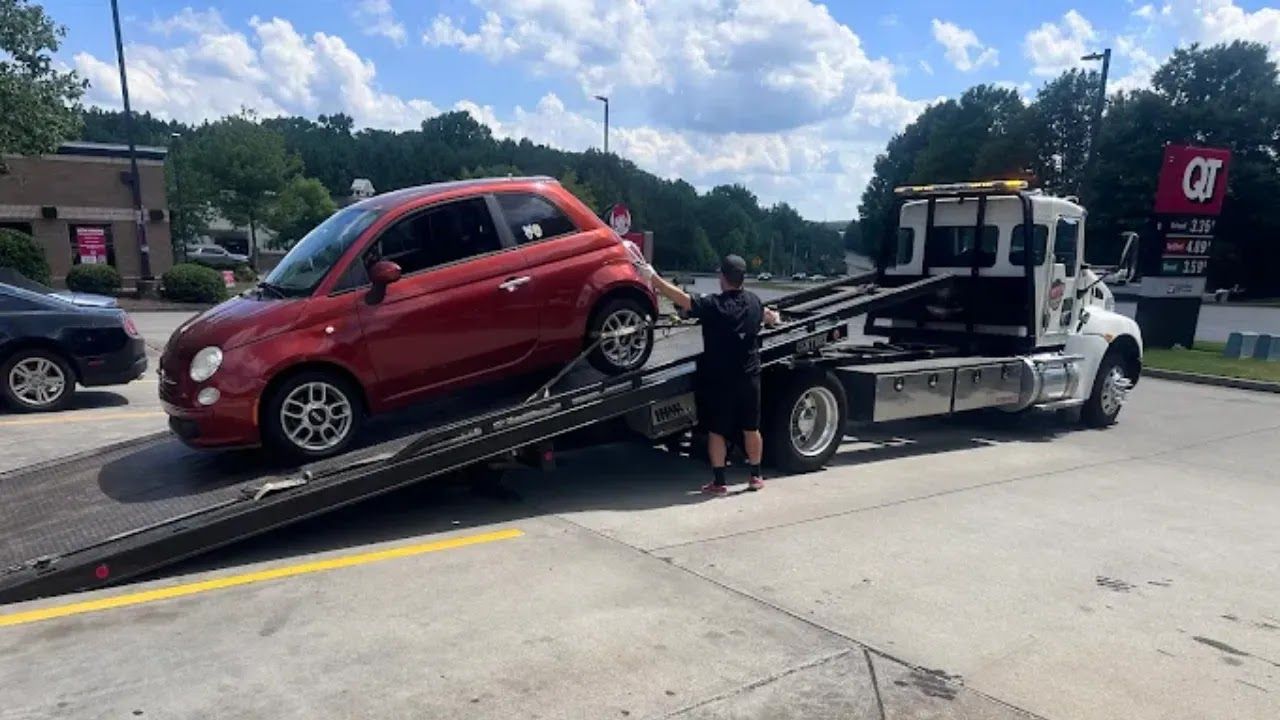
Vehicles rarely fail without warning signs. Recognizing common symptoms early gives you time to exit the flow of traffic safely before your vehicle loses power completely.
| Breakdown symptom | What it usually means | Immediate safe action |
|---|---|---|
| Engine overheating (Steam, sweet smell, rising temp gauge) | Cooling system leak or failed water pump | Pull over safely to the right and turn off the engine immediately |
| Electrical / battery warning (Dimming lights, battery dash icon) | Alternator or charging system loss | Avoid shutting the car off until safely off the highway; turn on hazards |
| Sudden tire failure (Rumbling vibration, pulling to one side) | Puncture, rapid pressure loss, or tread separation | Ease off the accelerator smoothly; coast to a flat, safe shoulder |
| Transmission slipping (High engine revs with loss of power) | Low transmission fluid or mechanical slip | Shift to neutral and use remaining momentum to reach an exit or shoulder |
What to do during sudden engine or power loss
If your dashboard warning lights flash or your engine begins to lose power on a busy highway, do not attempt to push through to your final destination. Turn on your hazard lights immediately, signal, and use your vehicle's remaining momentum to coast toward the nearest exit ramp, park-and-ride lot, or wide right-hand shoulder.
5-step emergency shoulder protocol for drivers
Executing a standard safety routine the moment your vehicle stops reduces risk and gives oncoming drivers maximum notice.
- Maneuver to the widest right-hand shoulder: Always guide your vehicle toward the right shoulder or an exit ramp. Left-side medians leave you stranded next to the fastest-moving traffic with virtually no buffer zone. If an off-ramp, commercial driveway, or wide turnout is reachable, take it.
- Turn on emergency hazard flashers: Activate your four-way flashers the moment you notice vehicle trouble. Keeping your emergency flashers running alerts approaching traffic from hundreds of yards away, giving high-speed drivers ample time to merge left.
- Stay belted inside or move behind the barrier: If you are stopped on a narrow highway shoulder with traffic flying past, your vehicle's steel cabin and seatbelt provide the safest protection. If smoke, fire, or immediate impact hazards force you to leave the vehicle, exit carefully through the passenger-side door away from live traffic and step well behind the steel guardrail or up an embankment.
- Maximize visual warnings safely: Keep all interior and exterior lights illuminated. Only place roadside flares or reflectors if you have a wide shoulder and can walk safely along the ditch side away from moving lanes.
- Dispatch trusted local professionals: Contact a licensed, local recovery specialist equipped with flatbeds to clear your vehicle quickly and safely.
Georgia Move Over law: driver rights and legal protections
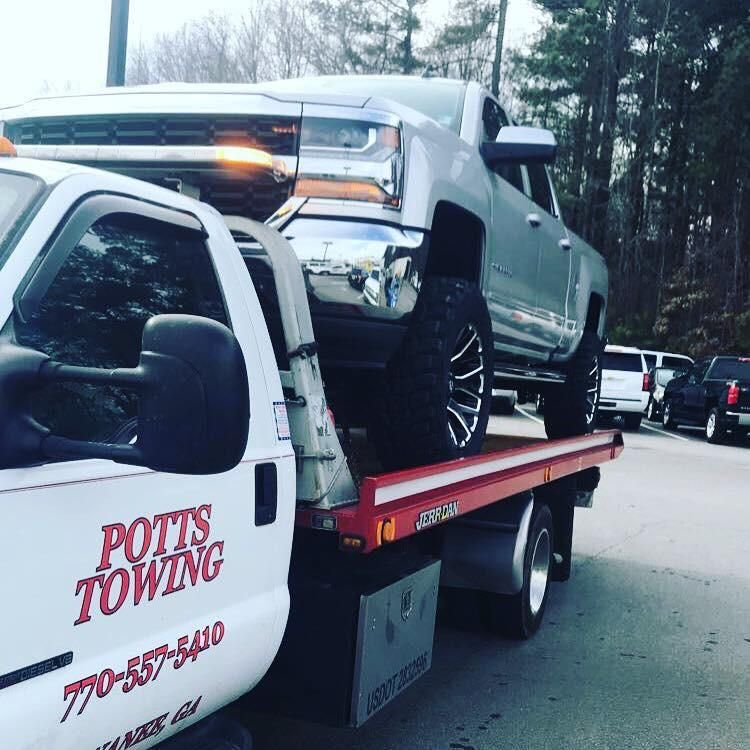
Knowing state traffic safety regulations helps you understand how passing drivers are legally required to react around your disabled vehicle and responding tow operators.
How Georgia's Move Over law protects you
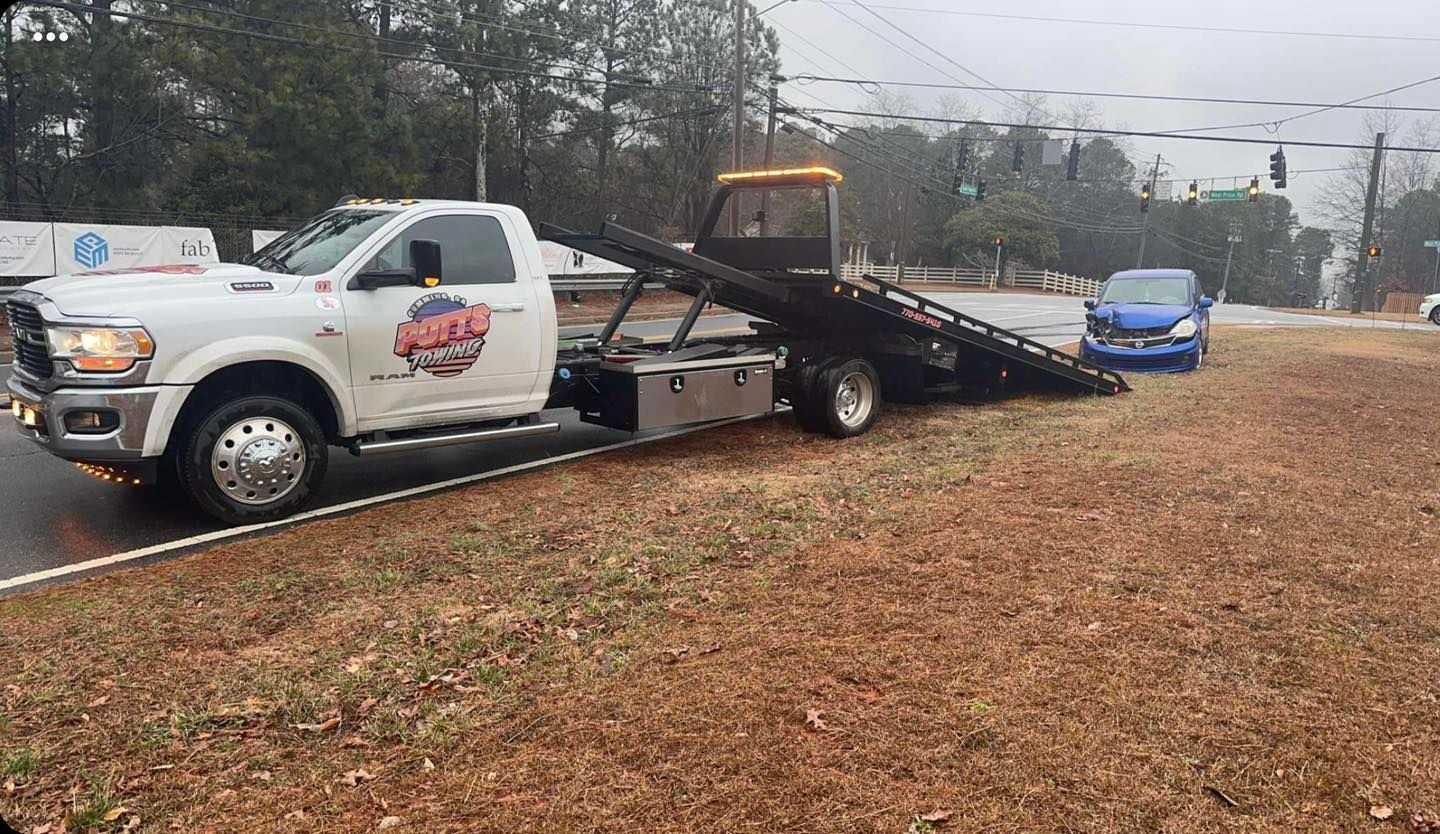
Under Georgia's Move Over law, approaching drivers are legally required to move over at least one lane when passing stationary emergency vehicles, highway service trucks, and authorized tow trucks displaying flashing amber or emergency lights. If heavy traffic prevents a safe lane change, drivers must slow down below the posted speed limit and be prepared to stop.
Working with an established
towing company in Cumming, GA ensures that our team arrives with high-visibility emergency lighting and specialized safety gear to protect you and your car during hook-up and loading.
DIY roadside repair vs professional flatbed transport
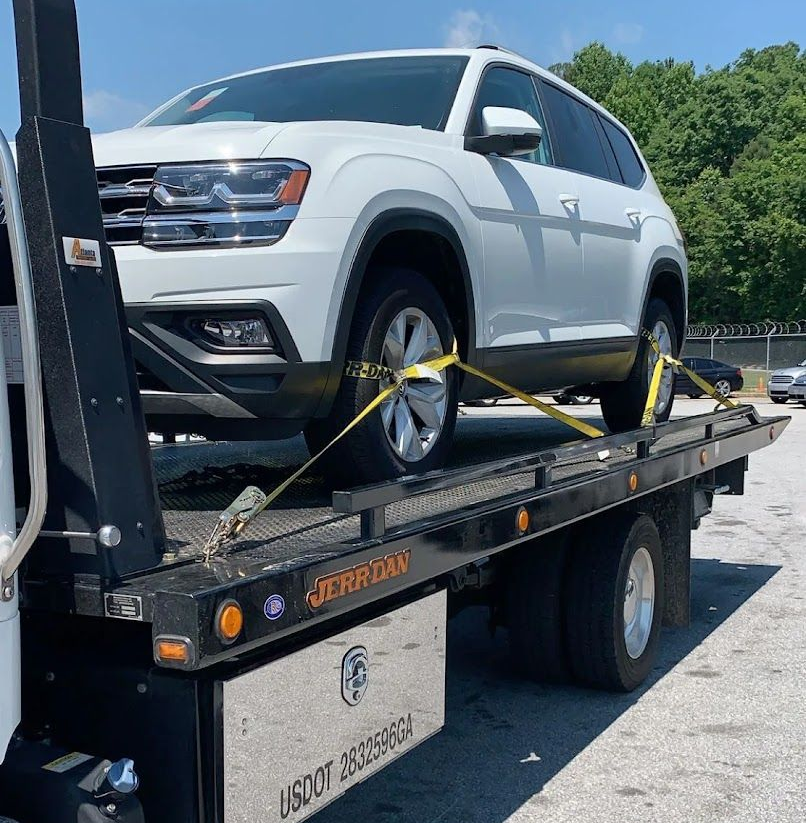
Trying to perform emergency repairs on a busy highway shoulder carries extreme risk. Understanding what can be safely handled versus what requires a professional flatbed prevents both personal injury and costly mechanical damage.
| Service situation | Recommended approach | Key safety and mechanical factors |
|---|---|---|
| Reserve fuel delivery | Safe for self-handling or quick roadside assist | Add fuel only on wide shoulders or flat parking lots away from moving lanes |
| Highway flat tire | Requires professional roadside or flatbed dispatch | Jacking up a vehicle inches from 70 mph traffic creates extreme rollover and strike hazards |
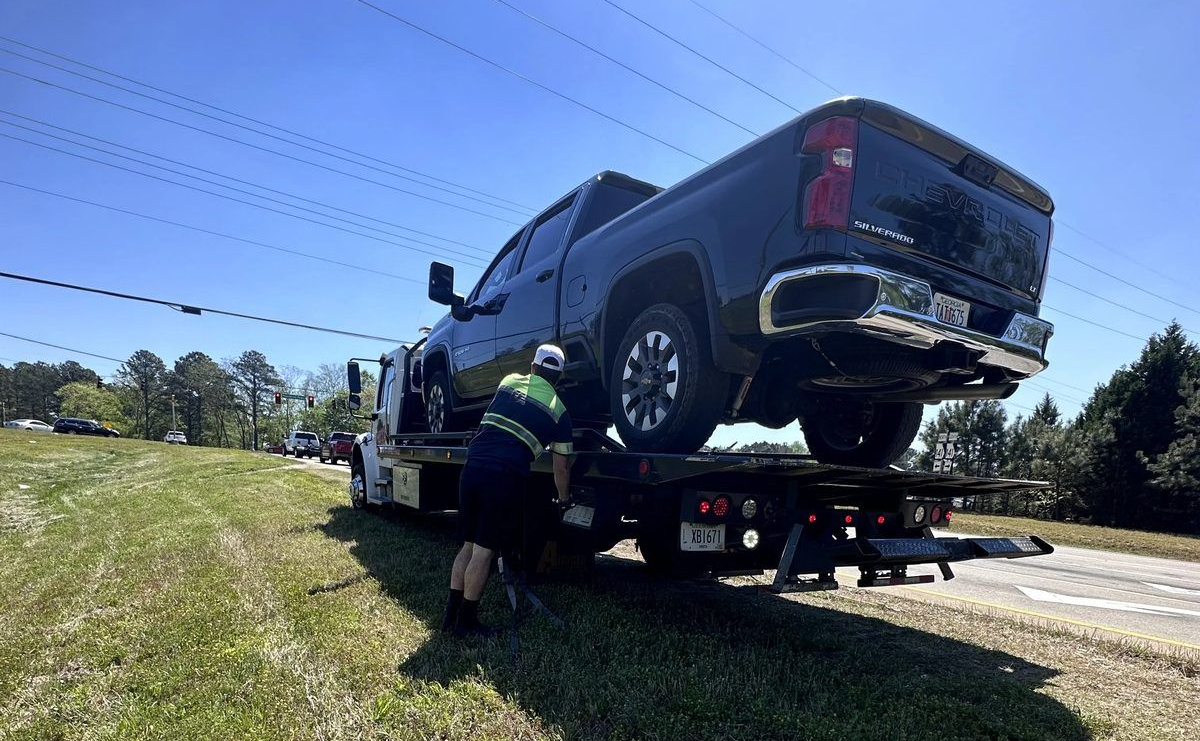
| AWD / 4WD vehicle transport | Requires professional flatbed transport | All four wheels must be off the ground to prevent transfer case and transmission destruction |
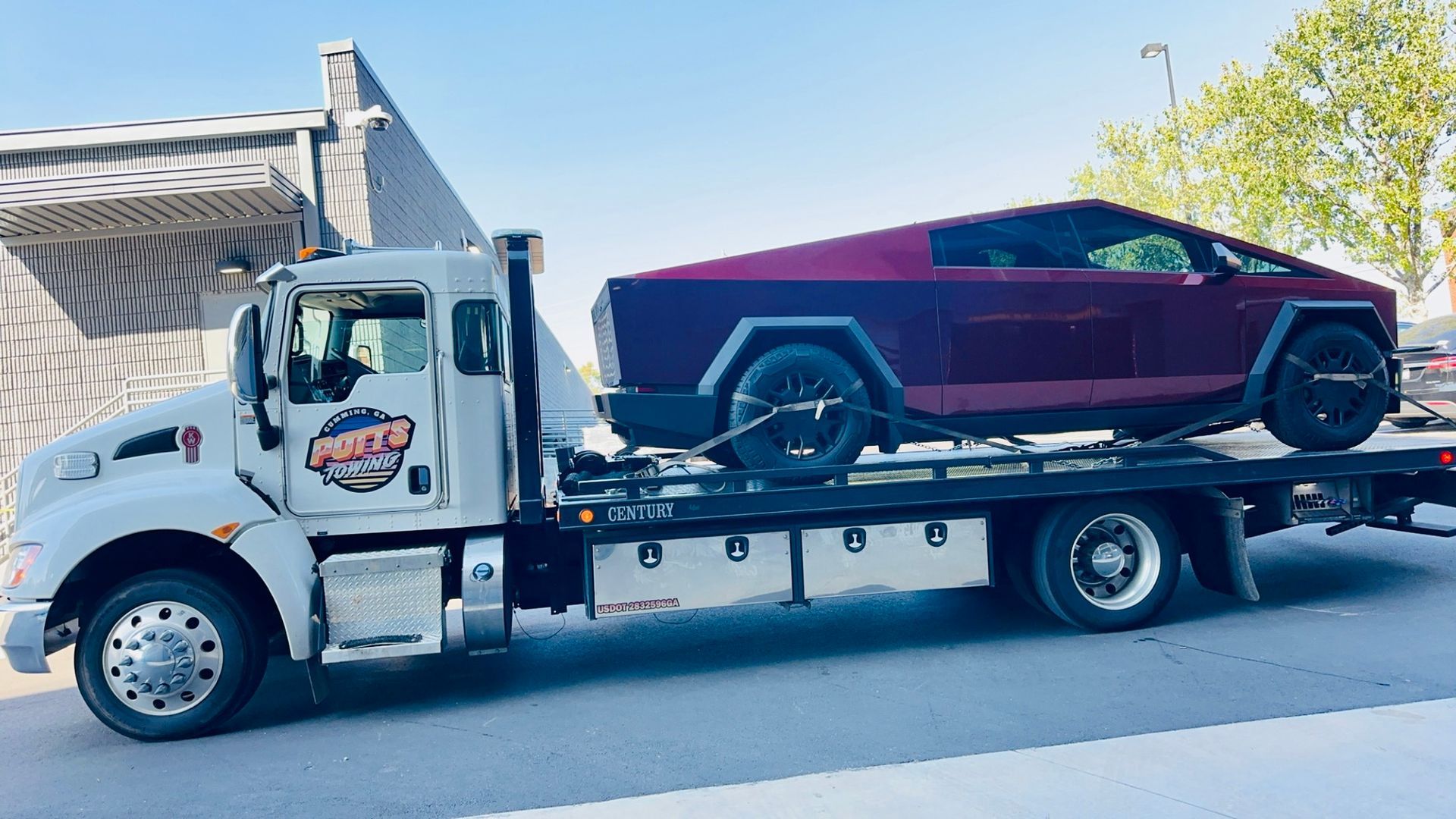
| Electric vehicle (EV) recovery | Requires professional flatbed transport | Zero-wheel rotation is mandatory to prevent inverter and drive motor damage |
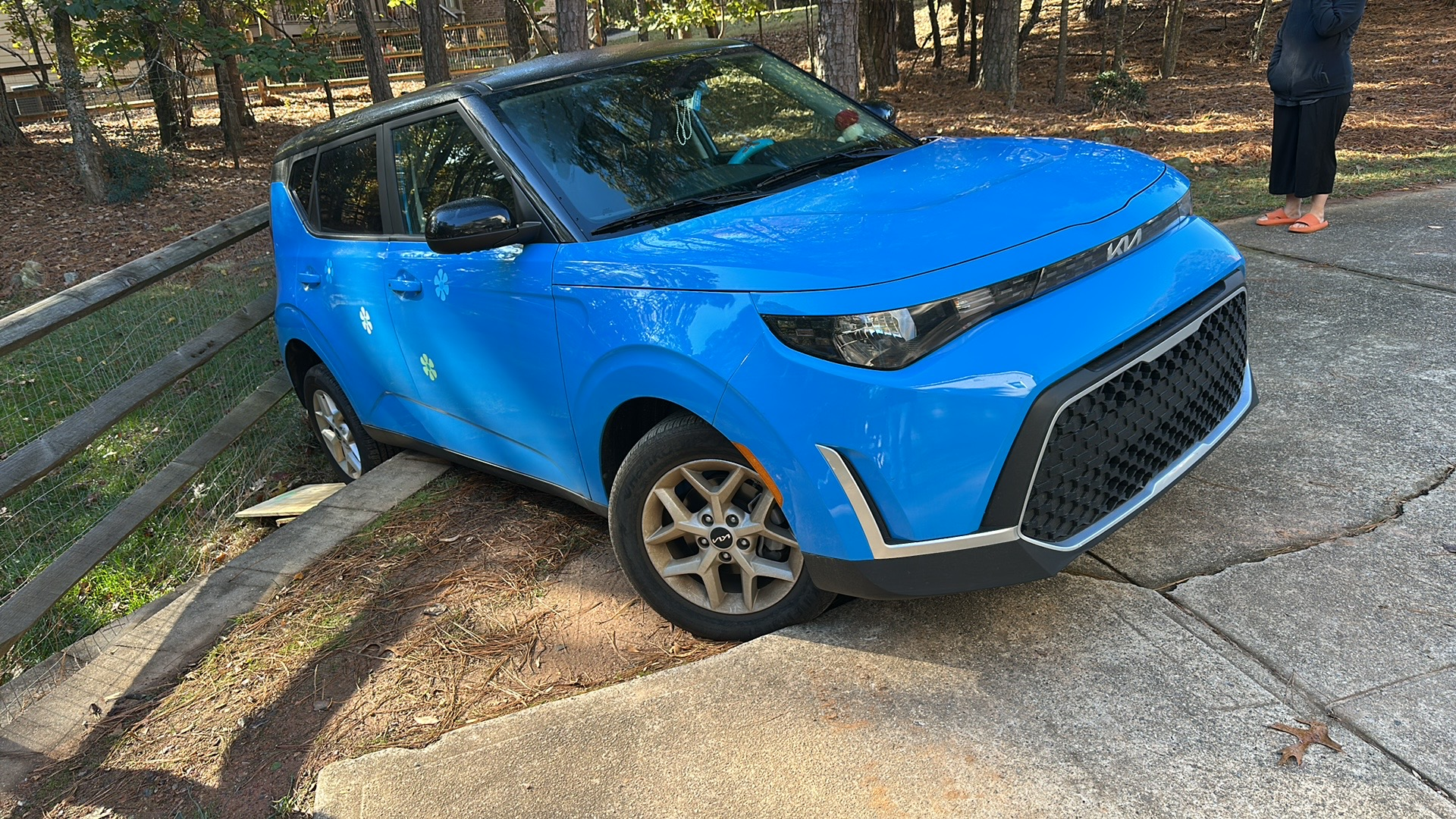
| Ditch winch-outs and mud recovery | Requires specialized recovery rigging | Prevents frame twisting and body panel damage during extraction |
Protecting AWD, 4WD, and EV drivetrains from damage
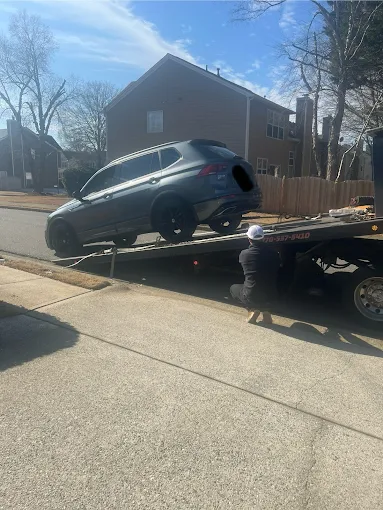
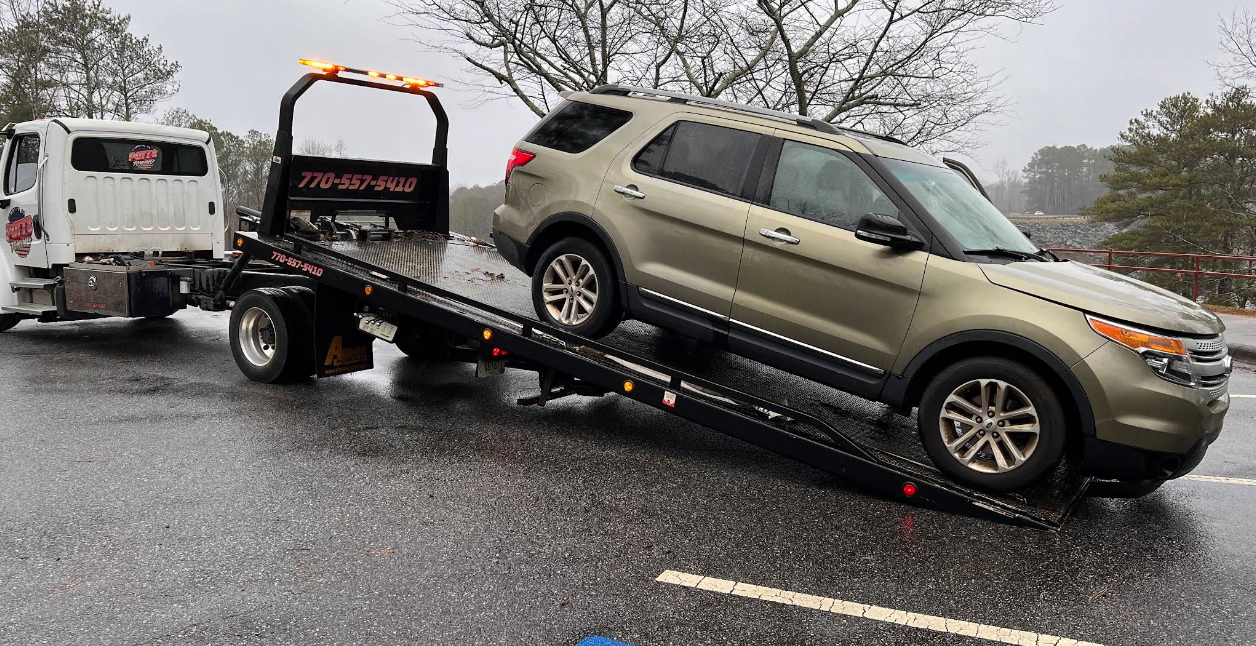
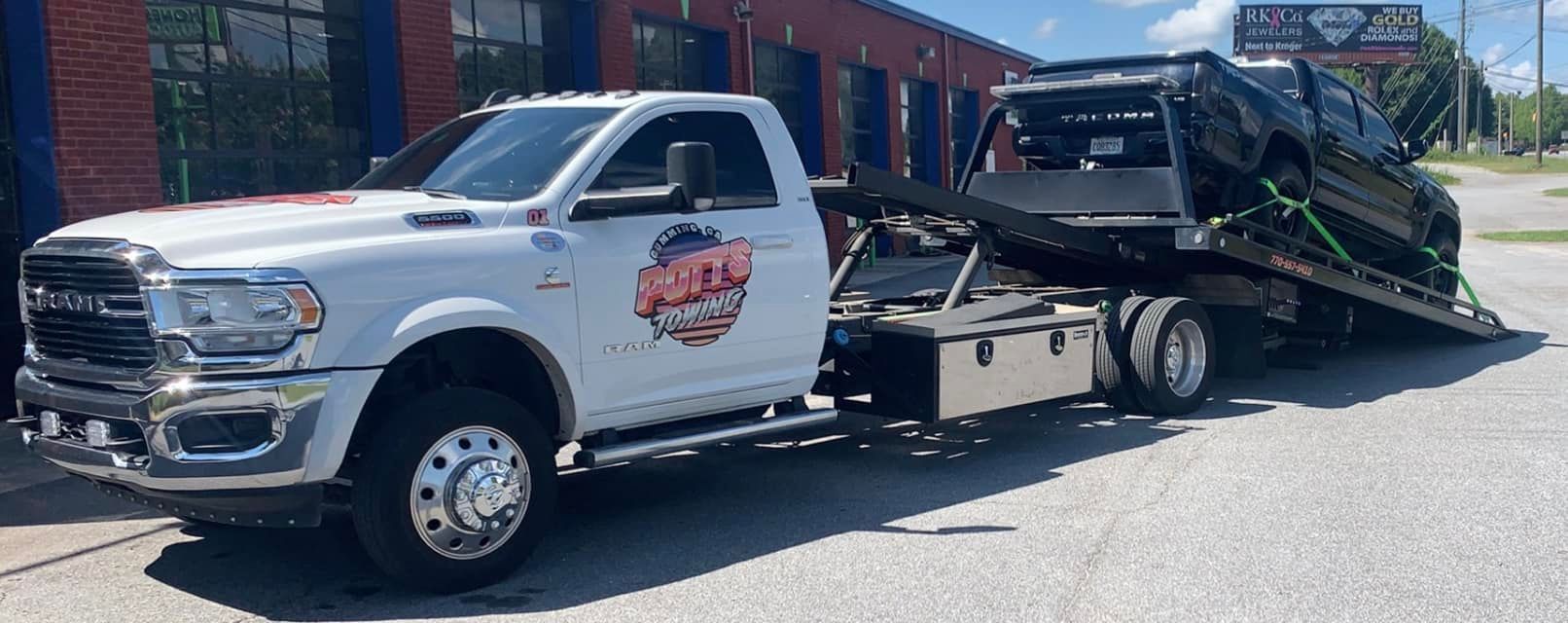
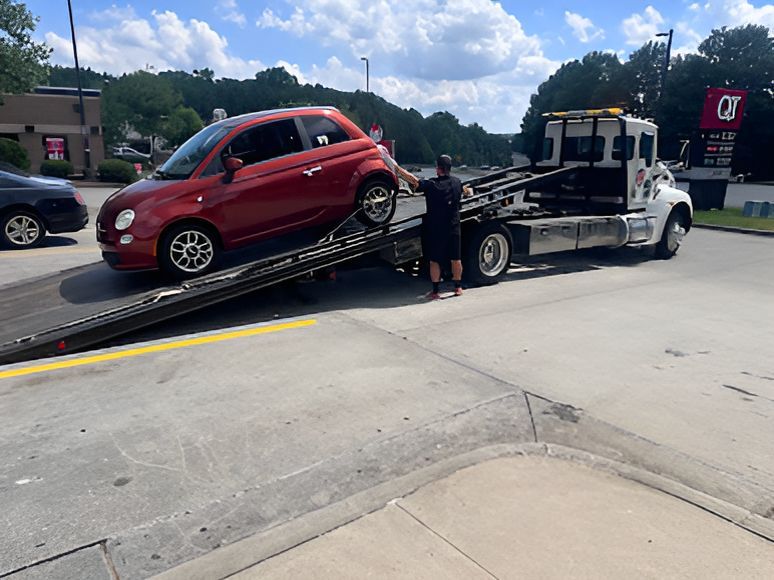
Modern all-wheel-drive vehicles, hybrid platforms, and electric vehicles must never be towed with their drive wheels rolling on the ground, which can cause severe friction damage to differentials, transfer cases, and electric drive motors. Professional recovery services use rollback flatbed trucks to carry all four wheels off the ground, ensuring your vehicle arrives at the repair shop in the exact condition it was picked up. For in-depth guidance on safe towing standards, explore our comprehensive towing service guide.
Roadside safety summary and next steps
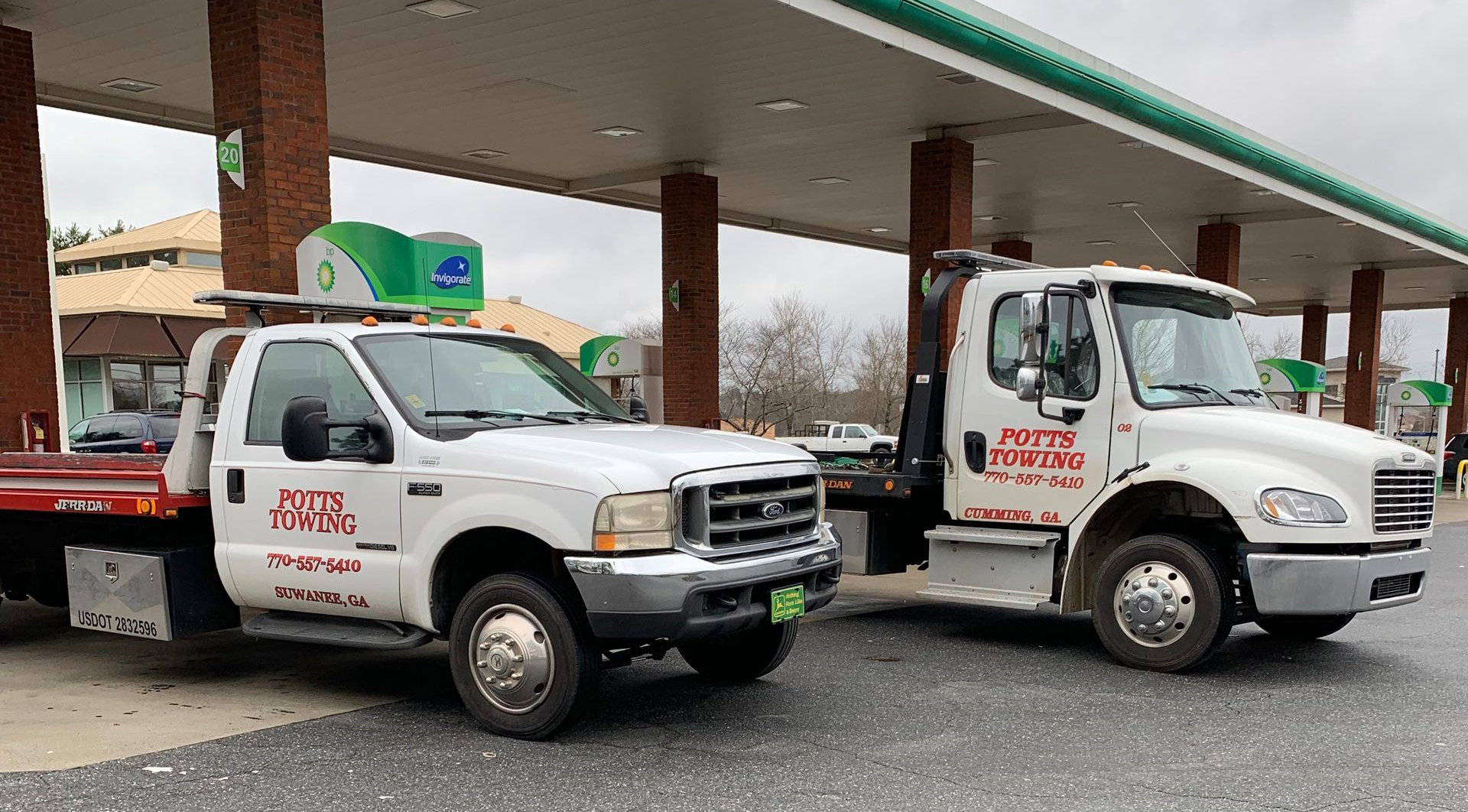
Experiencing a sudden highway breakdown is stressful, but taking the right steps keeps you and your passengers safe. By prioritizing the right shoulder, keeping hazard lights on, staying belted inside your vehicle, and leaving complex repairs to trained operators, you protect yourself against secondary accidents and costly drivetrain damage.
When you need rapid, reliable roadside assistance along GA-400 or across Forsyth County, Potts Towing provides prompt 24/7 dispatch, honest ETAs, upfront pricing with no hidden fees, and damage-free flatbed towing.
About the author
Austin Potts is the founder and lead recovery operator at Potts Towing, providing 24/7 light- to medium-duty towing, winch-outs, accident recovery, and emergency roadside services serving Cumming, Dawsonville, and Forsyth County. Known as The North Georgia Roadside Guardian, Austin combines deep technical expertise in modern vehicle recovery with a commitment to rapid response, transparent pricing, and driver safety education throughout North Georgia.