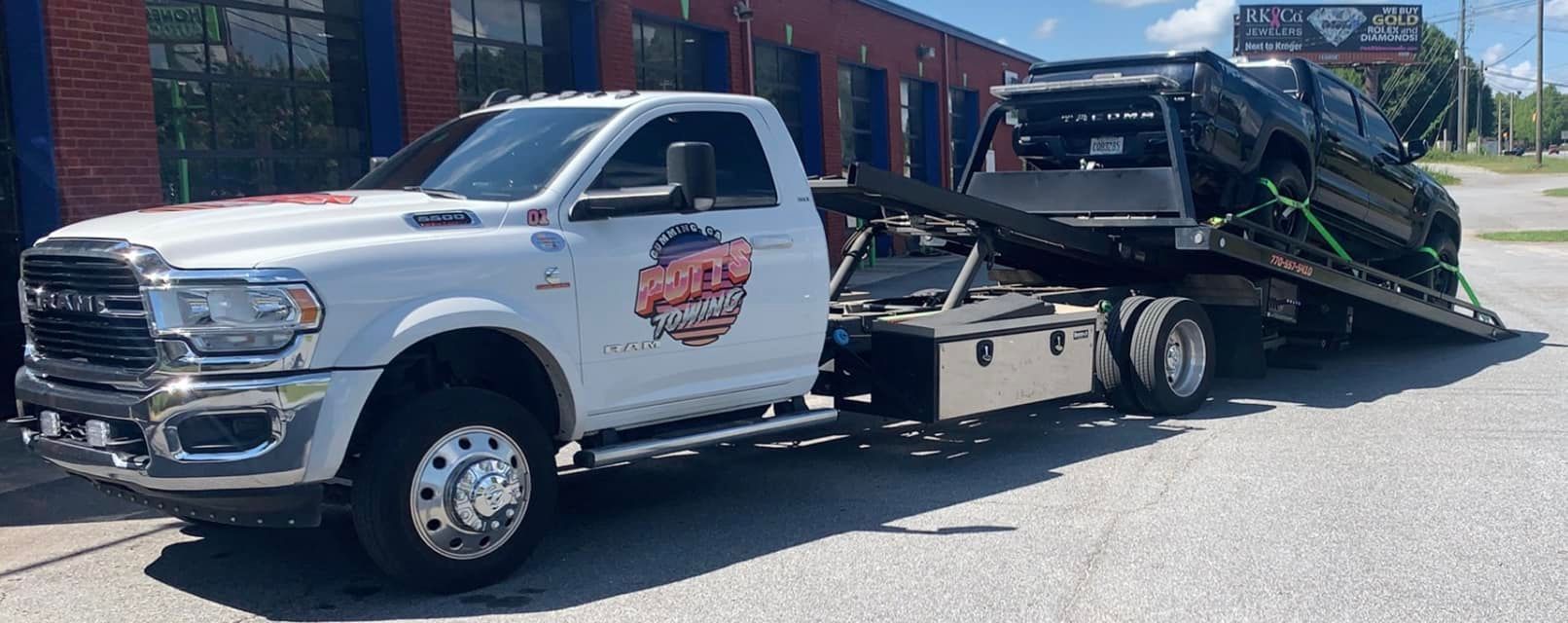
Hit a Deer Near Dawsonville? Is Your Car Safe to Drive?
Hitting a deer is jarring, even when the damage looks minor. Before you pull back onto the road, take five minutes to check the car.
This guide gives you a five-minute damage check and a clear way to tell whether to drive home, plus what to photograph for your insurer, so if you end up googling "towing company near me” and reach Potts Towing, you'll already know what you need.
TL;DR: What to do after hitting a deer
- Get the car somewhere safe, turn on your hazards, and stay away from the animal.
- Before you drive, check for leaking fluid, a damaged tire, broken lights, and warning lights on the dash.
- If colored fluid is leaking, the hood won't latch, or the engine starts running hot, have the car towed.
Drive it or tow it: quick reference
Find what you're seeing after the strike, then use the last column to decide your next move.
| What you find | What it usually means | Next step |
|---|---|---|
| Colored fluid dripping under the front end | Radiator or coolant line damage | Tow |
| Clear, odorless water dripping | Normal A/C condensation | Keep checking the rest |
| Temperature gauge climbing | Cooling system damage | Shut it off and tow |
| Hood won't latch or is bent upward | It could fly open at speed | Tow |
| Headlight out | You can't see the road or be seen | Tow if it's dark; drive slowly to a shop in daylight |
| Tire cut, flat, or rubbing on the body | Tire or wheel damage | Tire change if you have a good spare; tow if not |
| Airbags deployed | A hard impact | Tow |
| Scuffs or a dent, everything else normal | Likely cosmetic damage | Drive carefully and have a shop look it over |
Get safe and stay away from the deer
Your safety comes first. State Farm's guidance is to move your vehicle to a safe location when possible and turn on your hazard lights. Call police if the animal is blocking traffic or creating a hazard, and don't approach an injured or frightened animal (State Farm's 2026 animal collision report).
If you're stopped on a highway shoulder, our
GA-400 highway breakdown safety guide covers how to stay safe while you wait.
Run a five-minute damage check
Once you're safe, check the car before you drive it. State Farm recommends that drivers check for leaking fluids, damaged tires, broken lights, or other hazards before driving away. Here's how to do that in about five minutes.
- Look under the front end. Colored fluid (often green, orange, or pink) usually means coolant is leaking from the radiator. Clear, odorless water is usually just A/C condensation. If the engine is hot, leave the radiator cap alone; the coolant is under pressure and scalding.
- Check your lights. Turn on the headlights and hazards and walk around the car.
- Check the hood and grille. Press down on the hood to make sure it's latched. A cracked grille can hide a damaged radiator right behind it.
- Check the tires and wheel wells. Look for cuts in the tires and for bent bodywork that could rub against a tire once you start moving.
- Start the engine and watch the dash. Look for new warning lights, then watch the temperature gauge for a few minutes before you pull out.
If everything checks out, drive slowly and keep an eye on the temperature gauge on the way home. Have a shop look it over soon, even if it drives fine.
Photograph everything for your insurer
Photos taken at the scene make the insurance call easier. Before the car moves, photograph the damage and where the car came to rest.
State Farm notes that comprehensive coverage typically covers damage from collisions with animals, subject to the policy terms and deductible. Call your insurer to report the crash, and ask whether your policy includes comprehensive coverage and whether it pays for towing.
If another vehicle was involved, our
post-accident towing checklist walks you through what to do at the scene.
Help in Dawsonville and across Dawson County
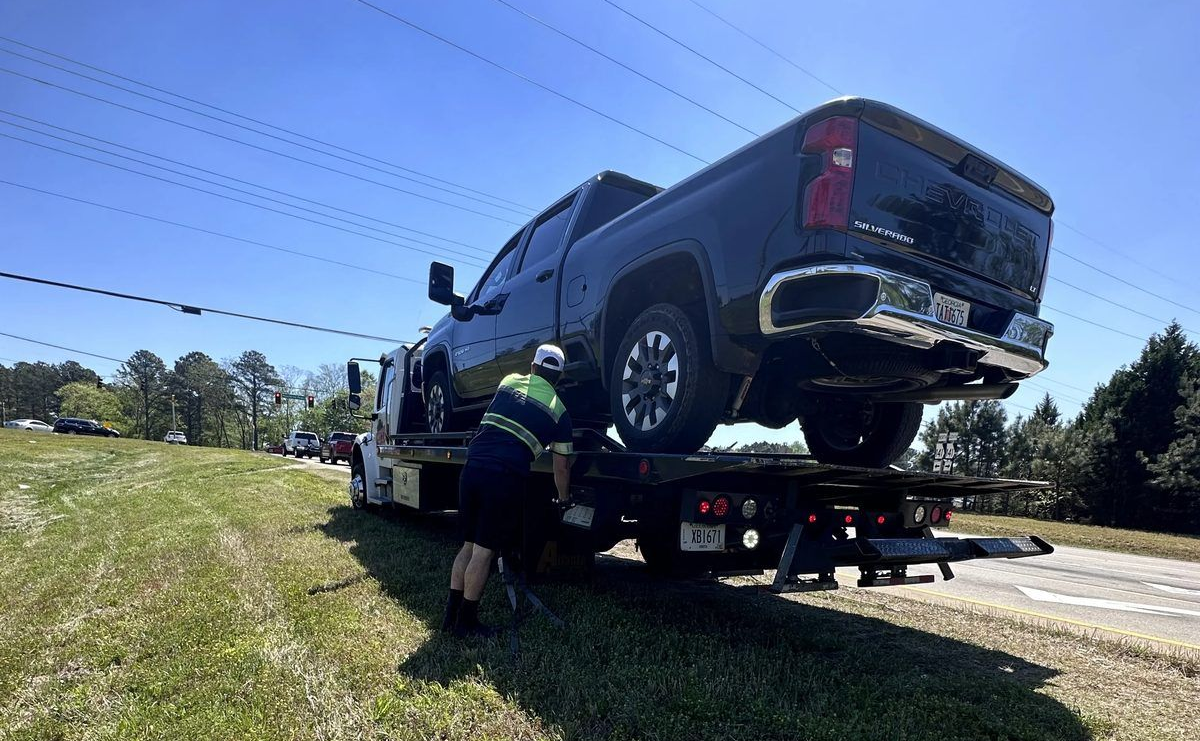
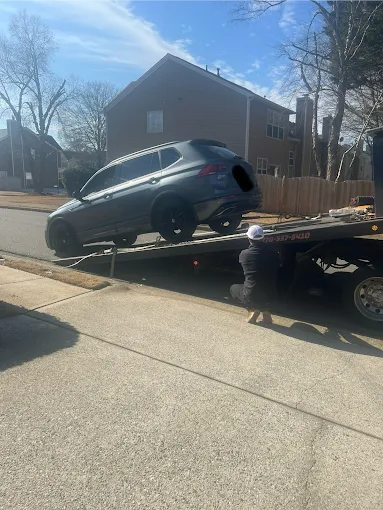
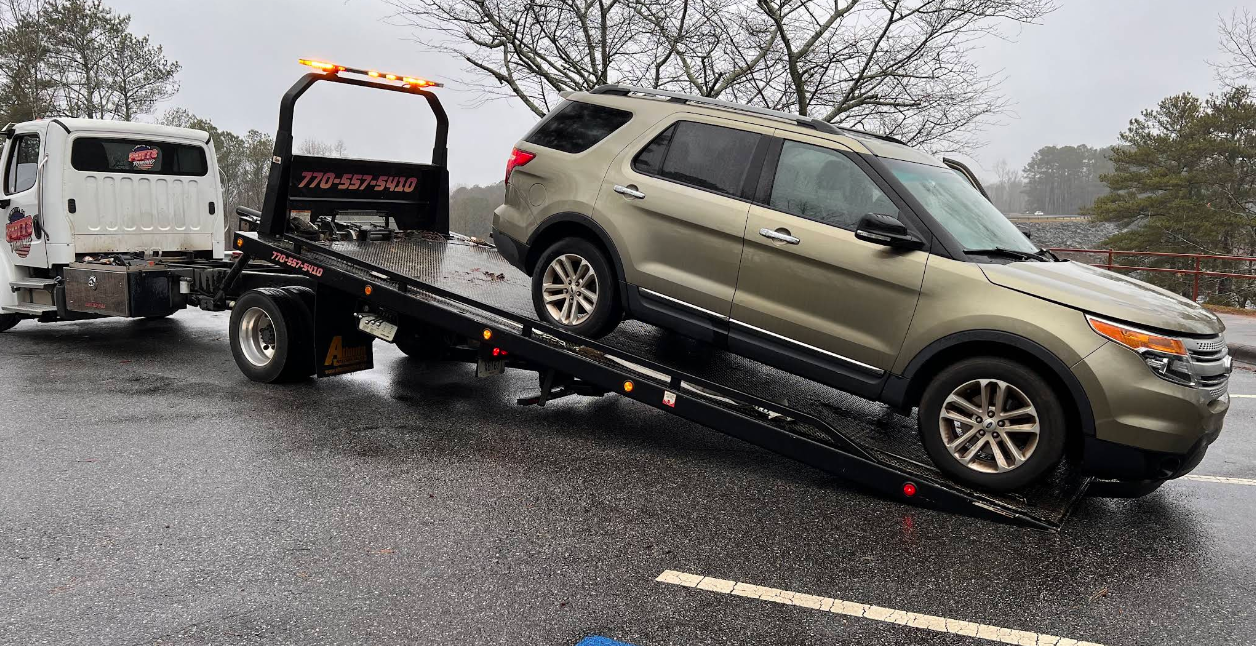
If anything in the "Tow" column showed up, let us bring the car home for you. Driving with a coolant leak can overheat the engine and cause more damage.
We'll take the car to your body shop or your driveway. Our average tow runs105 for the first 10 miles. These are estimates based on the average call, not a guarantee, so your quote may be higher or lower, as noted on
Potts Towing's pricing page. Text us photos of the damage and your location, and we'll give you a free estimate before we head out.
Potts Towing has a branch at 75 Elliot Road in Dawsonville. Call it directly at (706) 973-3582. We serve most of Dawson County, including Dawsonville and Silver City. Arrival times depend on where you are, so ask dispatch for an honest ETA when you call.
Learn more about our
towing and roadside service in Dawsonville, including accident recovery and flatbed transport.
How to avoid a deer strike this fall
Fall is peak season for deer strikes in Georgia. According to
Atlanta News First's report on State Farm's latest data, Georgia drivers had about a 1-in-115 chance of an animal collision over the past year, and collisions spike in October, November, and December because deer are more active during their breeding season.
When clocks fall back in early November, more evening drives happen in the dark. State Farm advises drivers to be especially alert from dusk to dawn, when animals may be more active and visibility is reduced. A few habits help:
- Slow down and stay alert, especially where you see deer-crossing signs.
- Use your high beams when it's safe to do so.
- If a deer steps into your path, brake firmly and stay in your lane when possible, because swerving can cause you to lose control or collide with another vehicle.
Watch for a second deer, too. AAA advises that deer rarely travel alone, so if you see one, there are likely more nearby.
Get home safe this deer season
After a deer strike, get safe first, then run the five-minute check before you drive. If the car is leaking or running hot, let us bring it home for you.
We're a local, family-owned crew, we quote honestly, and we're here 7 days a week.
Get a free estimate from Potts Towing, or text us a few photos of the damage.
About the author
Austin Potts is the owner and operator of Potts Towing, a family-owned towing and roadside assistance company headquartered in Cumming with a branch in Dawsonville. He works calls across Forsyth County, Dawson County, and North Georgia.